
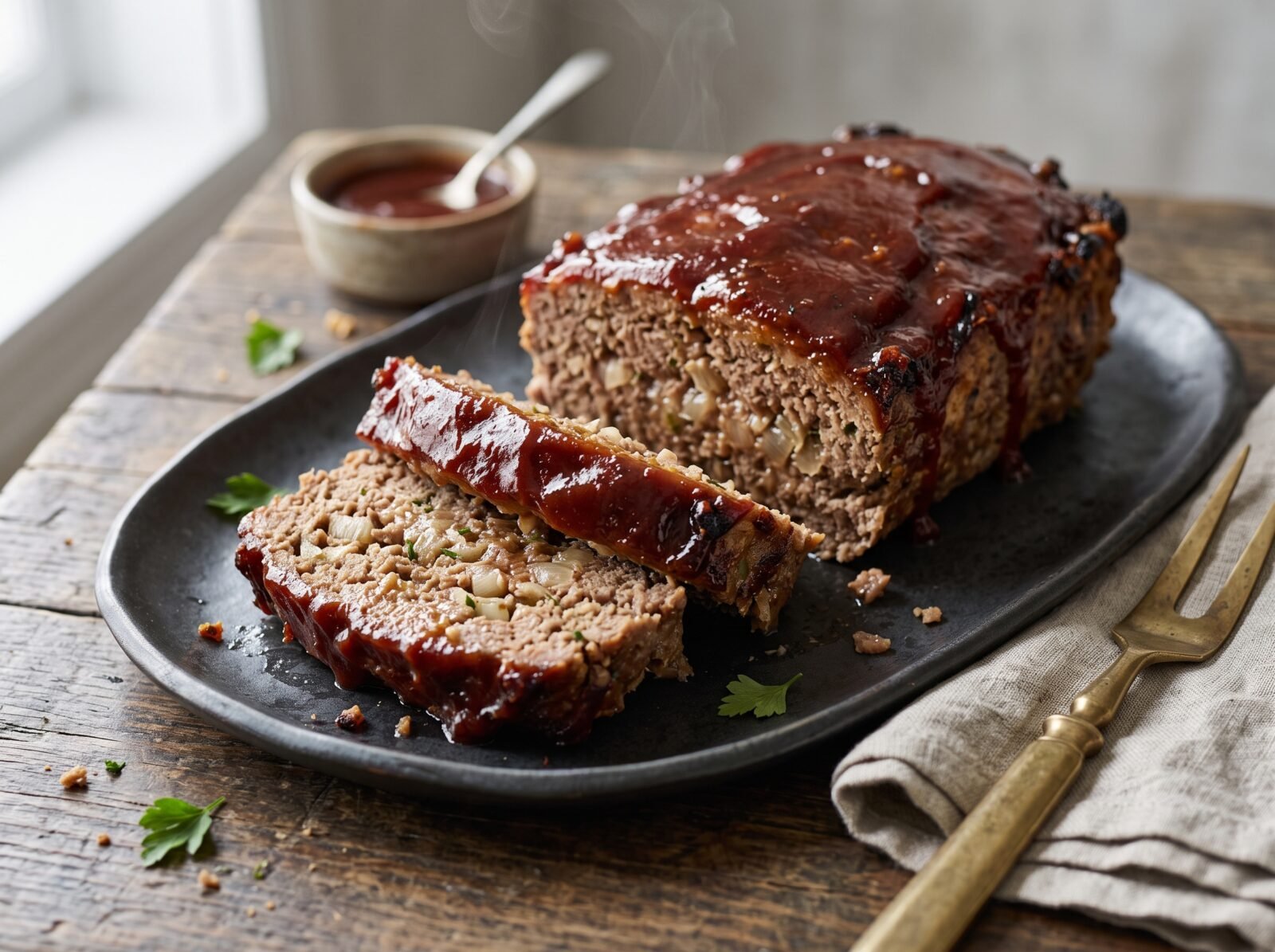
Few dishes anchor the family dinner table with quite the same nostalgic warmth as a classic homemade meatloaf. When executed properly, it is everything hearty comfort food promises to be: an intensely savory, fork-tender interior bound together with sweet caramelized onions, crowned by a tangy-sweet glaze that bubbles and crisps around the edges of the loaf pan. It smells like Sunday evening dinners, filling the kitchen with deep aromas of roasted beef, sweet onion, and toasted pan drippings.
Too often, though, home cooks suffer through dense, dry slabs reminiscent of compacted hamburger patties. A truly exceptional meatloaf isn’t merely seasoned ground beef shaped into a loaf and baked—it relies on foundational food chemistry, moisture retention, and gentle handling. Mastering this reliable, quick-prep classic requires understanding how each ingredient works to create a sliceable, juicy centerpiece that holds its shape cleanly under a chef’s knife.
The Science of Tenderness: Panades, Fat Ratios, and Protein Nets
The secret to a melt-in-your-mouth meatloaf lies in managing how ground meat contracts as heat climbs. Ground beef is composed of muscle fibers held together by proteins like myosin and actin. When exposed to heat above 140°F (60°C), these proteins denature, tighten, and squeeze out intracellular water like a wringing sponge. Left on their own, lean beef crumbles or compacts into a tough brick.
This recipe counters that natural contraction with a classic French culinary technique: the panade—a paste formed by hydrating starch with liquid. By combining 1 cup of dried bread crumbs with 1 cup of whole milk, the starch granules swell and form a protective gel matrix. When mixed into the ground beef, this gelatinous barrier wedges itself between protein strands. As the meat contracts in the oven, the panade traps expelled juices and rendered fat within the loaf rather than letting them drain away into the bottom of the pan.
Fat selection plays an equally vital role. For meatloaf, an 80/20 (ground chuck) or 85/15 beef blend hits the sweet spot. Anything leaner than 90/10 leaves the loaf dry and crumbly, regardless of how much liquid you add, while leaner blends lack the mouthfeel delivered by rendered intramuscular fat.
The single whole egg acts as the architectural binder. While the panade prevents tough contracting and traps moisture, the egg’s albumin and yolk proteins set around 145°F to 158°F (63°C to 70°C), knitting the crumb, chopped onions, and ground beef into a cohesive loaf that slices cleanly without crumbling apart.
Finally, the iconic glaze is more than just a flavor topping. Composed of ketchup, brown sugar, and prepared mustard, this high-sugar, acidic lacquer undergoes surface caramelization under oven heat. As the sugar reduces and thickens, it forms a glossy barrier that shields the top of the loaf from drying out, while its acidity balances the richness of the beef.
Chef Pro Tips & Troubleshooting
- Hydrate the Panade FirstInstead of tossing dry bread crumbs directly into raw meat, mix the bread crumbs and milk together in your bowl and let them sit for 3 to 5 minutes before adding the beef. This pre-hydration ensures uniform distribution and guarantees the crumbs don’t pull moisture out of the meat.
- Handle with a Light TouchOverworking ground beef activates excess myosin, turning a delicate texture gummy and rubbery. Use your fingertips like rakes to gently fold the meat, beaten egg, and hydrated crumbs together just until incorporated. Stop mixing the second the streaks of egg and clumps of onion disappear.
- Fine Dice or Sauté the OnionsChopping the onion uniformly fine ensures it softens thoroughly during the 1-hour bake. If you prefer an extra layer of sweetness and want to avoid any raw crunch, give the chopped onions a quick 5-minute sweat in a tablespoon of butter before folding them into the mixture.
- Cracker Crumb AlternativeAs noted in the original recipe notes, finely crushed butter crackers (such as Ritz or saltines) provide a luscious texture. Because crackers contain added butter and salt, slightly dial back the kosher salt you add to the raw mix if taking this route.
- Loaf Pan vs. Freeform Baking SheetBaking in a traditional 9×5-inch loaf pan yields a uniform, moist loaf bathed in its own rendered juices. If you prefer crisp, browned edges all around your meatloaf, press the mixture into your loaf pan to shape it, then invert it onto a parchment-lined rimmed baking sheet before brushing on the glaze and baking.
- Doneness TestingNever rely exclusively on baking time. Ovens vary, and meat density varies. Insert a digital instant-read thermometer into the thickest center of the loaf. When it hits 160°F (70°C), pull it immediately.
Serving, Slicing, and Pairing Recommendations
Patience right out of the oven is essential. Allow the meatloaf to rest in the pan for 10 full minutes before slicing. During resting, the loosened protein matrices relax, reabsorbing the hot juices migrating throughout the loaf. Slicing too soon causes the flavorful juices to pour out over the cutting board, leaving the meat dry.
Classic Sides:
Pair generous slices of meatloaf with skin-on garlic mashed potatoes or buttery Yukon Gold puree, which can catch drippings and glaze. Roasted green beans with lemon zest, steamed buttered sweet corn, or crispy roasted Brussels sprouts cut through the dish’s hearty profile.
Next-Day Sandwiches:
Cold meatloaf is legendary for good reason. Thick, chilled slices hold together firmly, making them ideal for a griddled sandwich on toasted sourdough or soft white sandwich bread, topped with a swipe of spicy Dijon mustard, crisp romaine, and sharp cheddar.
Easy Traditional Meatloaf
An effortless, ultra-tender ground beef meatloaf with a milk-and-bread-crumb panade and a caramelized sweet and tangy ketchup glaze.
- 1 ½ pounds ground beef
- 1 large egg
- 1 onion, chopped
- 1 cup milk
- 1 cup dried bread crumbs (or crushed crackers)
- Salt and pepper to taste
- ⅓ cup ketchup
- 2 tablespoons brown sugar
- 2 tablespoons prepared mustard
- Prep and Preheat: Gather all ingredients. Preheat your oven to 350°F (175°C). Lightly grease a standard 9×5-inch metal loaf pan with cooking spray or butter.
- Mix the Loaf: In a large mixing bowl, combine the ground beef, chopped onion, milk, dried bread crumbs, and egg. Season generously with salt and black pepper to taste. Gently mix with clean hands until just unified—do not compact or overwork. Press the mixture evenly into the prepared loaf pan.
- Apply the Glaze: In a small bowl, whisk together the ketchup, brown sugar, and prepared mustard until smooth and completely emulsified. Spoon and spread the glaze evenly across the top surface of the meatloaf.
- Bake to Temperature: Transfer to the middle rack of the preheated oven and bake uncovered for approximately 1 hour. The meatloaf is done when the glaze is bubbling, the edges are caramelized, and an instant-read meat thermometer inserted into the center reads at least 160°F (70°C).
- Rest and Serve: Remove from the oven and let rest in the pan for 10 minutes to allow the juices to redistribute throughout the meat. Slice into thick portions, serve hot, and enjoy!