
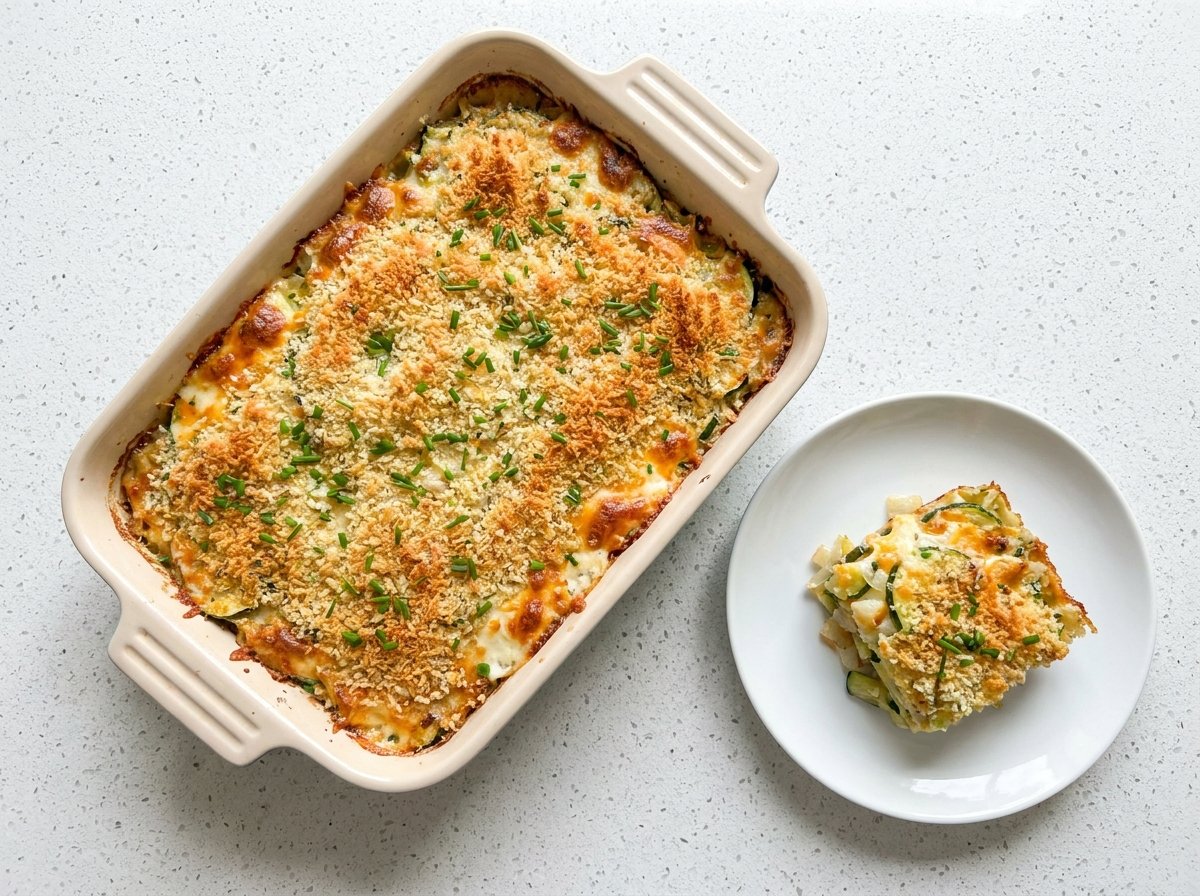
Shredded Zucchini Casserole is the absolute king of summer comfort food when your garden or local grocery store starts overflowing with green squash. We have all been there. You plant two modest zucchini seeds in May, and by July you are practically running a squash sanctuary. You bake zucchini bread, you fry up quick fritters, you toss it into pasta sauces, and yet the crisp crisper drawer keeps filling up. That is where this dish steps in to save dinner. It turns a humble, water-logged vegetable into a bubbly, cheesy, golden-topped masterpiece that people actually ask for seconds of.
The Story, History, & Flavor Profile
Why We Love Zucchini Casserole
Casseroles got a bad reputation for a few decades because people kept dumping canned condensed soups into Pyrex dishes and calling it a day. But real casseroles the kind built from scratch with fresh veggies, sharp cheeses, and crisp breadcrumbs are pure magic. This dish bridges the gap between light summer produce and rich, cozy comfort food. It hits all the right notes: salty, savory, sharp, and slightly sweet from cooked onions and squash.
The Ultimate Summer Abundance Solution
Zucchini comes from the Americas, but Italian immigrants gave us the varieties we slice and dice today. The word zucchini comes from zucca, the Italian word for gourd. In home kitchens across North America, home cooks needed clever ways to deal with mid-summer harvests. Baking them into eggs and cheese was a natural fit. This recipe takes those classic roots and dials up the texture so every bite feels deliberate, not sloppy.
Texture Matters: Achieving the Perfect Bite
Nobody wants a spoonful of mush. Squash naturally holds an immense amount of water. If you drop raw grated zucchini directly into a hot baking dish, that water leaks out into your eggs and cheese, leaving you with a watery mess that breaks apart on the plate. Getting a tight, tender-crisp bite means managing that moisture upfront. When you do it right, the zucchini holds its structure, giving you a dense, custardy center flanked by gooey cheese and a crunchy top crust.
The Secret to Avoiding Sogginess
Salt is your best friend here. Osmosis is a simple physical reaction: salt draws moisture out of the zucchini cells before heat ever touches them. Squeezing out that extra water transforms the vegetable from a wet sponge into a dense base that absorbs all the rich, savory garlic, onion, and melted cheese without diluting the flavor.
Ingredient Science & Deep-Dive
Zucchini: Moisture Control & Slicing Tech
Zucchini is almost ninety-five percent water. That is a wild stat when you think about cooking with it. When shredding your squash, aim for a coarse shred rather than a fine paste. Fine shreds turn to puree instantly under heat. A coarse shred gives the finished bake body.
Always toss the grated zucchini with half a teaspoon of salt and let it sit in a colander for at least fifteen minutes. Watch the bottom of your sink; you will see a steady trickle of liquid dripping out. After the timer goes off, dump the salted zucchini into a clean, dry cotton kitchen towel or cheesecloth. Twist the top tight and squeeze like you mean it. Keep twisting until no more water runs out. You will end up with half the original volume, but ten times the flavor concentration.
The Cheese Blend: Mozzarella, Sharp Cheddar, & Parmesan
Using just one cheese leaves your dish flat. A three-cheese combo builds depth and structural integrity:
- Mozzarella: This is your melt engine. Mozzarella provides that long, stretchy pull that makes hot casseroles so appetizing. Buy low-moisture whole-milk mozzarella for the richest texture and least amount of added liquid.
- Sharp Cheddar: Mozzarella lacks punch, so Cheddar steps in with bright tang and saltiness. Aged sharp Cheddar brings big flavor that cuts straight through the neutral taste of the squash.
- Parmesan: This hard cheese acts as a natural flavor enhancer packed with glutamates. Mixing half a cup into the base creates a savory backbone, while tossing the rest with the breadcrumb topping gives you a salty, crisp brown crust.
Eggs & Aromatics: Structure, Richness, & Base Flavor
Four large eggs act as the binder. As the dish bakes, the egg proteins coagulate, turning the loose cheese and veggies into a solid slice that holds its shape.
Do not drop raw onions and garlic directly into the mix. Raw onions release water during baking and stay crunchier than the surrounding ingredients. Sautéing your finely chopped onion in olive oil first breaks down those tough plant walls, caramelizing the natural sugars for sweetness. Adding minced garlic for just the final minute prevents it from scorching and turning bitter.
Panko, Butter, & Chives: The Golden Topping
Traditional breadcrumbs often turn soggy on top of a moist bake. Panko breadcrumbs are Japanese-style flaked crumbs that stay amazingly crisp because they absorb less oil during cooking. Tossing them in melted butter coats each flake so it toasts up evenly to a deep mahogany brown in the oven. Freshly chopped chives applied right after baking give a clean, oniony pop of fresh color and taste that cuts through all that glorious melted cheese.
Comprehensive Substitutions & Dietary Adjustments
Gluten-Free Options
Switching this dish to a gluten-free version is dead simple:
- Swap out the standard Italian seasoned panko for gluten-free panko or coarse gluten-free breadcrumbs.
- Alternatively, use crushed pork rinds or almond meal mixed with garlic powder and Italian seasoning for the top crunch layer.
Dairy-Free Swaps
If dairy does not agree with you, you can still pull off a fantastic version:
- Replace the mozzarella and Cheddar with your favorite plant-based shred blend that melts easily.
- Use nutritional yeast in place of the Parmesan cheese for that sharp, nutty profile.
- Swap the melted butter for extra virgin olive oil or melted vegan butter sticks.
Keto & Low-Carb Modifications
This recipe is already low in net carbs, but you can streamline it even further:
- Skip the panko breadcrumbs entirely.
- For the topping, mix together almond flour, grated Parmesan, melted butter, and a dash of Italian herb seasoning. It browns beautifully without spiking your carb count.
Vegetarian & Vegan Variations
The original recipe is naturally vegetarian! To make it completely vegan:
- Swap the eggs for a mixture of four tablespoons of ground flaxseed mixed with twelve tablespoons of water (let it gel for ten minutes first).
- Use plant-based cheese shreds and vegan butter for the crumb topping.
Budget-Friendly Grocery Hacks
- Buy block cheese and shred it yourself. Pre-shredded bag cheese is coated in cellulose powder to prevent sticking, which hinders smooth melting and costs more per ounce.
- If zucchini prices are high in the off-season, swap in yellow summer squash or half squash and half russet potato (shredded and squeezed dry).
Essential Kitchen Equipment & Tool Breakdown
Grating Tools: Box Grater vs. Food Processor
A standard stainless steel box grater is inexpensive and easy to clean. Use the large-hole side for shredding your squash. If you are making a massive batch or doubling the recipe for a potluck, pull out the food processor with the coarse shredding disc attached. You will process eight cups of zucchini in roughly twenty seconds flat.
Squeezing Essentials: Towels, Cheesecloth, & Colanders
Do not use cheap, thin paper towels to squeeze out the zucchini—they will tear into tiny soggy paper bits in your squash. Stick to a flour sack towel, a clean lint-free kitchen towel, or double-layered cheesecloth. Keep a large stainless steel or silicone colander set in your sink to drain the initial salted squash.
Skillets & Pans for Sautéing
A ten-inch cast-iron skillet or heavy stainless steel pan works best for cooking down the onions and garlic. Heavy pans retain heat better, ensuring your onions soften evenly without burning around the edges.
Choosing the Best 2-Quart Baking Dish
A standard 2-quart rectangular baking dish (roughly 11×7 inches or 9×9 inches) gives you the ideal depth. Glass (like Pyrex) or ceramic dishes heat evenly and allow you to see when the bottom layer has turned set and golden. Lightly grease the inside with cooking spray or a bit of olive oil so the slice slides out clean.
Common Mistakes & How to Fix Them
Mistake 1: Skipping the Salt-and-Squeeze Step
The Problem: Your casserole comes out looking like soup with a cheese float on top.
The Fix: Never rush this step! Give the salt at least fifteen minutes to work its magic, and use real arm muscle when squeezing out the towel.
Mistake 2: Overcrowding the Sauté Pan
The Problem: Onions steam and become rubbery instead of soft and sweet.
The Fix: Use a wide skillet over medium heat so the onion pieces have room to cook without stacking on top of each other.
Mistake 3: Adding Breadcrumbs Too Early
The Problem: Putting breadcrumbs on at the beginning causes them to burn black before the egg base bakes through.
The Fix: Bake the casserole uncovered for twenty minutes first so the interior sets. Add the buttered panko mixture for only the final ten to fifteen minutes to get a light, perfectly toasted crust.
Mistake 4: Oven Temperature Inaccuracies
The Problem: Hot spots in an uncalibrated oven cause uneven cooking, leaving one corner burnt and the center gooey.
The Fix: Hang an inexpensive oven thermometer inside your oven to verify it is truly holding 375°F (190°C). Rotate the pan halfway through if your oven heats unevenly.
Quick Fixes for a Wet or Loose Casserole
Did you bake it and find a pool of liquid on top? Don’t panic.
- Slide a paper towel lightly over the top surface to wick away excess surface oil or steam moisture.
- Return the dish to the oven for an extra five to ten minutes uncovered on a lower rack so bottom heat evaporates the lingering water.
- Let the dish rest on a wire rack for ten to fifteen minutes before cutting! As it cools slightly, the egg-and-cheese custard sets firm.
Storage, Meal Prep, & Reheating Secrets
Refrigeration & Shelf Life
Let the dish cool completely to room temperature before covering it tightly with aluminum foil or plastic wrap. Stored in an airtight container, it keeps beautifully in the fridge for up to four days. The flavors actually meld together overnight, making lunch leftovers tasting even better than dinner on day one.
Freezing Instructions (Raw vs. Baked)
- Freezing Baked: Cut cooled casserole into individual portion squares. Wrap each piece tightly in plastic wrap, then pack them into a freezer-safe zip-top bag. Freeze for up to two months. Thaw overnight in the fridge before reheating.
- Freezing Raw: Avoid freezing raw zucchini inside the assembled mixture! The cells collapse upon thawing, releasing massive amounts of water that turn the raw casserole into mush. Always bake before freezing.
Reheating for Maximum Crispiness
Avoid the microwave if you want that breadcrumb topping to stay crispy! Microwave heat turns panko soft and rubbery.
- Oven: Place leftover slices on a baking sheet lined with parchment paper. Bake at 350°F (175°C) for ten to twelve minutes until warm and bubbling.
- Air Fryer: Pop a piece into your air fryer basket at 325°F (160°C) for four to five minutes. This gets the top unbelievably crisp while warming the middle evenly.
- Microwave: If you are at work and only have a microwave, heat on 70% power for ninety seconds to heat it gently without separating the cheese fats.
Serving Suggestions & Pairing Ideas
Protein Mains to Serve Alongside
This dish is versatile enough to act as a hearty vegetarian main course or an outstanding side dish. Try serving it alongside:
- Grilled lemon herb chicken breasts or thighs.
- Pan-seared pork chops with garlic butter.
- Ribeye steaks fresh off the grill.
- Flaky baked cod or salmon fillets.
Crisp Salads & Fresh Sides
Since this casserole is rich, salty, and cheesy, pair it with bright, acidic side dishes to balance out your plate:
- A simple arugula salad tossed with lemon juice, extra virgin olive oil, and shaved radish.
- Fresh summer heirloom tomato slices topped with chopped basil and balsamic glaze.
- A cold cucumber and dill salad dressed with red wine vinegar.
Beverage Pairings: Wine, Beer, & Non-Alcoholic Ideas
- White Wine: A crisp, high-acid Sauvignon Blanc or dry Pinot Grigio cuts clean through the rich melted Cheddar and egg base.
- Red Wine: If you prefer red, pick a light-bodied Pinot Noir that won’t overpower the subtle sweetness of cooked zucchini.
- Beer: A cold, hoppy Pilsner or light Pale Ale acts as a palate cleanser between bites.
- Non-Alcoholic: Freshly squeezed lemonade with sparkling water, or iced green tea garnished with mint leaves.