
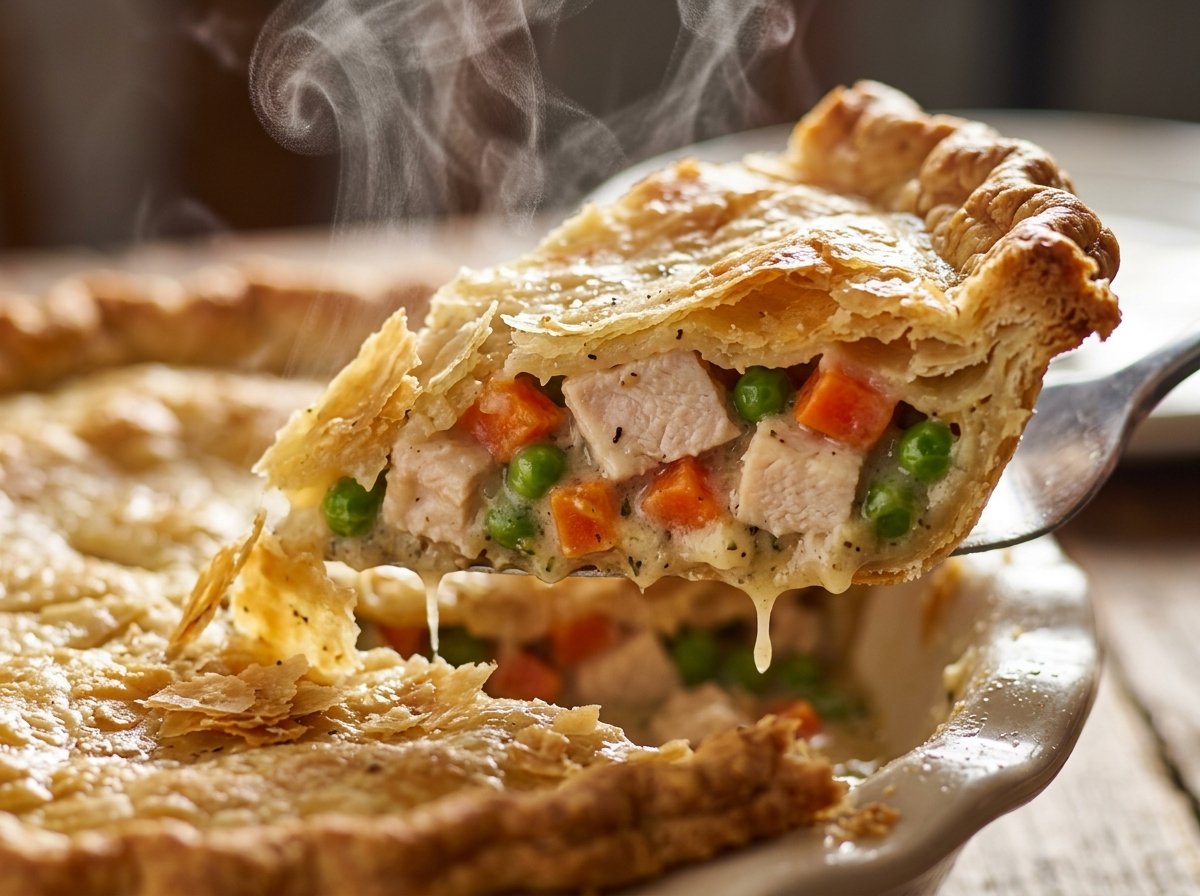
Break through the bronzed, blistered pastry lid with a fork, and the satisfying audible shatter of laminated crust gives way to a fragrant plume of savory steam. Inside lies the undisputed standard of cool-weather comfort food: succulent chunks of poached chicken breast, vibrant sweet carrots, tender celery, and burst-in-your-mouth green peas suspended in an unctuous, herb-scented velouté. The aroma carries the rich, buttery warmth of a well-toasted roux blended with sweet allium notes and earthy celery seed.
Chicken pot pie is a timeless cornerstone of home cooking for good reason. It bridges the rustic elegance of classic French pastry and saucecraft with the unfussy, heart-warming reliability of American family supper. By using quality refrigerated pie dough as a smart shortcut alongside a scratch-built filling, this recipe delivers bakery-level flakiness and deep culinary complexity in a fraction of the time, turning a humble weeknight dinner into a celebratory centerpiece.
The Science of the Velouté: Starch Gelatinization and Crust Hydration
At the heart of any memorable pot pie is the balance between sauce viscosity and pastry moisture. A watery filling soaks the bottom crust into an unpalatable doughy paste, while an over-thickened sauce turns pasty and starchy in the oven. The sauce engineered here is fundamentally a hybrid between a classic French velouté (a blond roux enriched with seasoned chicken stock) and a béchamel (roux enriched with dairy).
The foundation begins with equal parts fat and flour—specifically one-third cup of unsalted butter and one-third cup of all-purpose flour. When flour cooks in hot butter, the starch granules are coated in fat, preventing them from clumping when liquids are introduced. Gently sautéing the onion in that butter before stirring in the flour allows the fat to extract sulfur-based aroma compounds from the alliums while providing adequate time to cook out the raw starch flavor of the wheat.
When the combination of chicken broth and milk is whisked into the roux, heat triggers starch gelatinization between 140°F and 175°F (60°C to 80°C). The amylose and amylopectin starches within the flour absorb water, swell dramatically, and burst into a three-dimensional lattice that traps the liquid. The milk contributes dairy sugars (lactose) and milk proteins that round out the savory depth of the chicken broth, softening the sauce’s mouthfeel and guaranteeing that it coats the back of a spoon with a silky sheen.
Meanwhile, baking at a robust 425°F (220°C) is deliberate pastry engineering. High radiant heat causes the cold water and fat trapped between dough laminations to turn instantly into steam. This steam expands, pushing the dough layers apart into crisp, micro-thin sheets before the starch sets. Simultaneously, the surface undergoes rapid Maillard browning and sugar caramelization, sealing the upper crust into a crisp barrier that protects the molten filling underneath. Slitting vents across the top crust provides a relief valve for escaping steam, which prevents hydrostatic pressure from rupturing the crimped perimeter or bubbling out into a messy overflow.
Chef Pro Tips & Troubleshooting
- Par-Cook Vegetables Without Over-SofteningPoaching the chicken, carrots, peas, and celery together for 15 minutes accomplishes two goals: it cooks the chicken breast through without drying it out, and it softens the root vegetables. Cut your carrots and celery into uniform quarter-inch slices so they tenderize at the exact same rate. If using very small or thawed peas, hold them back and add them directly to the drained mixture to preserve their bright green snap.
- Add Aromatic Depth with Dried HerbsWhile celery seed provides that nostalgic deli-counter savory note, lifting this pie from great to transcendent requires dried thyme and rubbed sage or poultry seasoning. Stirring one-half teaspoon of dried thyme and one-half teaspoon of poultry seasoning directly into the butter and flour mixture blooms their fat-soluble essential oils, distributing warm botanical aromas evenly throughout every bite.
- Temper the LiquidsPouring refrigerator-cold broth and milk into a hot roux can cause the butter fat to seize, leading to lumps. Warm your broth and milk slightly, or add them in a steady, thin stream while whisking vigorously with a flat wire whisk to ensure an ultra-smooth, mirror-like consistency.
- Prevent the Soggy Bottom CrustPre-made refrigerated pie dough is tender and buttery, but bottom crusts can struggle in moist savory pies. For an ultra-crisp base, place your pie plate directly onto a preheated baking sheet or pizza stone set on the lowest oven rack. The direct conductive heat sets the bottom dough immediately before liquid can penetrate it.
- Egg Wash FinishTo give your top crust an appetizing golden-amber shine, whisk one egg with one tablespoon of cold water and brush lightly over the top pastry right before baking, avoiding the vents.
- The Critical 10-Minute RestNever slice into a pot pie straight from the oven. The bubbling velouté needs at least 10 to 15 minutes of resting on a wire rack to drop below the boiling point. During this cool-down window, the swollen starch molecules stabilize, allowing you to slice neat, structured portions that hold together on the plate rather than collapsing into soup.
Serving and Pairing Suggestions
Chicken pot pie is inherently a complete meal in a single dish, packing proteins, vegetables, starches, and rich dairy into every slice. To balance its luscious richness, construct side dishes that provide brightness, crisp textures, and clean acid:
- Bright Shaved Fennel & Citrus Salad: Paper-thin shavings of raw fennel bulb, peppery baby arugula, and segment oranges dressed in a crisp champagne vinaigrette slice straight through the velvety roux sauce.
- Tart Cranberry Chutney: A small spoonful of homemade spiced cranberry sauce or lingonberry compote on the side offers a pleasant sweet-tart contrast that elevates poultry dishes.
- Roasted Asparagus with Lemon Zest: Tender-crisp oven-roasted asparagus spears tossed in olive oil, sea salt, and fresh lemon juice bring an earthy, vegetal snap to the plate.
- Wine Pairings: Look for high-acid white wines that mirror the richness of the velouté without getting overwhelmed. An oaked or lightly oaked Chardonnay from California or Burgundy pairs seamlessly with buttery crusts, while a crisp dry Chenin Blanc or Austrian Grüner Veltliner provides refreshing citrus minerality. For beer enthusiasts, an earthy Belgian Saison or a crisp, malty farmhouse ale balances the savory herbal notes beautifully.
Classic Homemade Chicken Pot Pie
Tender simmered chicken, carrots, peas, and celery folded into a rich, savory velouté gravy, baked inside a flaky double pie crust.
- 1 pound skinless, boneless chicken breasts, cubed
- 1 cup sliced carrots
- 1 cup frozen green peas
- ½ cup sliced celery
- ⅓ cup butter
- ⅓ cup chopped onion
- ⅓ cup all-purpose flour
- ½ teaspoon salt
- ¼ teaspoon black pepper
- ¼ teaspoon celery seeds
- 1 ¾ cups chicken broth
- ⅔ cup milk
- Optional flavor boost: ½ teaspoon dried thyme and ½ teaspoon poultry seasoning
- 2 (9-inch) unbaked pie crusts
- Preheat and Prep: Gather all ingredients. Preheat your oven to 425°F (220°C).
- Simmer Chicken and Vegetables: Combine cubed chicken, sliced carrots, frozen peas, and sliced celery in a medium saucepan; add water just to cover. Bring to a boil over high heat, then boil for 15 minutes until chicken is cooked through and vegetables are just tender. Drain thoroughly and set aside.
- Cook Roux and Aromatics: In a separate saucepan, melt the butter over medium heat. Add the chopped onion and cook until soft and translucent, 5 to 7 minutes. Stir in the all-purpose flour, salt, black pepper, celery seeds (and optional thyme/poultry seasoning if using). Cook for 1 minute while stirring constantly to eliminate raw flour flavor.
- Incorporate Liquids: Slowly pour in the chicken broth and milk in a steady stream while whisking continuously to prevent lumps.
- Thicken the Sauce: Reduce heat to medium-low. Simmer gently, whisking frequently, until the sauce thickens into a glossy, velvety gravy that coats the spoon, 5 to 10 minutes. Remove from heat.
- Assemble the Pie: Fit 1 unbaked pie crust snugly into the bottom and sides of a 9-inch pie plate. Spoon the drained chicken and vegetable mixture evenly into the crust. Pour the hot thickened sauce evenly over the top.
- Seal and Vent: Cover the pie with the second unbaked pie crust. Crimp and flute the edges together with your fingers or a fork to create a tight seal, and trim away any excess overhang. Cut several small slits into the center of the top crust to allow trapped steam to escape freely during baking.
- Bake: Transfer the pie plate to the oven (placing it on a rimmed baking sheet to catch any stray drips). Bake at 425°F (220°C) until the pastry is deeply golden brown and the filling is visibly bubbling through the steam vents, 30 to 35 minutes.
- Rest and Serve: Remove from the oven and let rest on a cooling rack for 10 minutes to allow the filling starches to set. Slice into wedges and serve warm!