
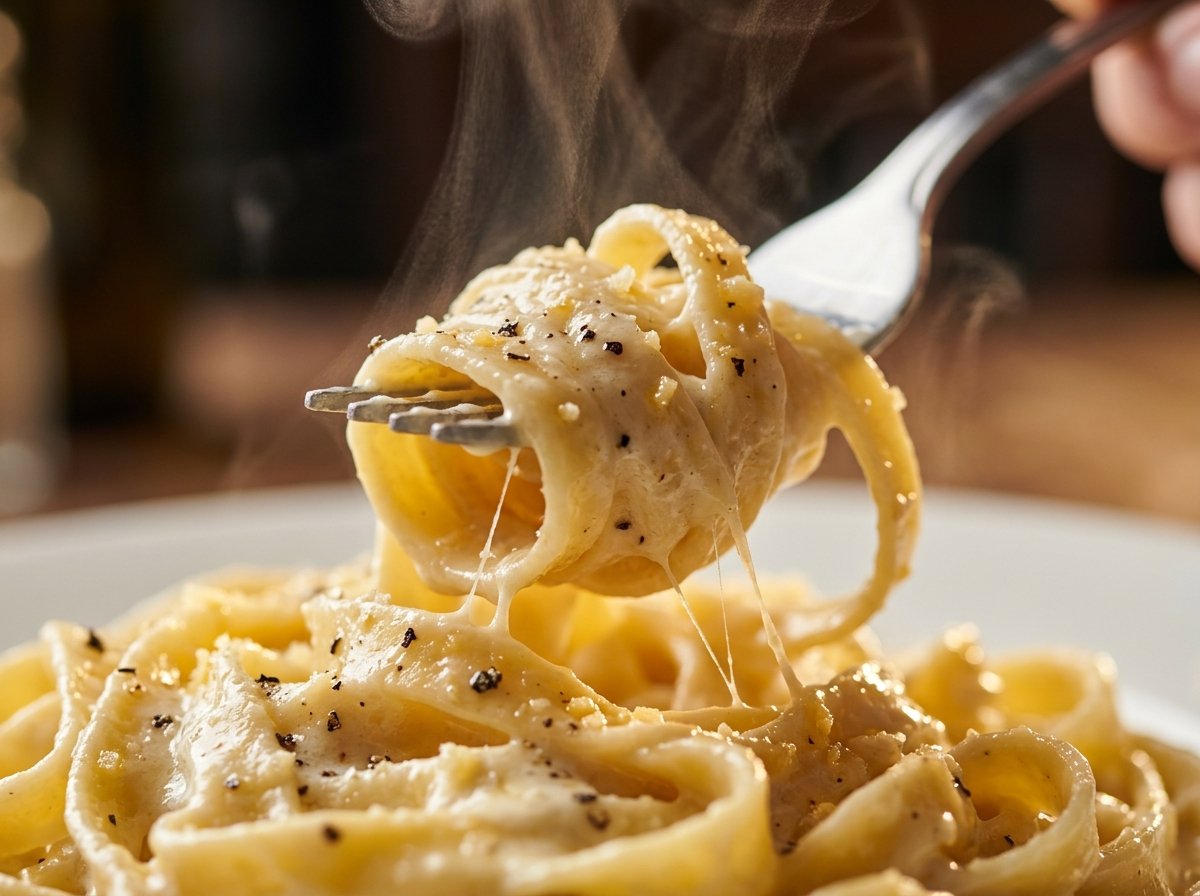
Steam rises in fragrant ribbons as freshly drained ribbons of pasta dive headfirst into a glossy, bubbling pan of ivory sauce. Every strand of fettuccine emerges slicked in rich dairy, carrying an aroma alive with sweet browned butter, sharp nutty parmesan, and the comforting backbeat of garlic. The texture is luxurious: neither heavy nor cloying, but rather a clinging, velvety coat that stays satiny from the first bite to the last swipe of the plate.
Traditional Italian Alfredo relies on a temperamental emulsion of pasta water, butter, and Parmigiano-Reggiano, while classic American-style versions lean on long reductions of heavy cream. Both methods carry a steep margin of error—one wrong twitch of the heat dial and the emulsion shatters into an unsightly puddle of yellow oil and rubbery cheese clumps.
This smart 10-minute adaptation bypasses the anxiety entirely through an ingenious culinary shortcut: cream cheese. It yields a restaurant-grade sauce with deep flavor, zero graininess, and a fraction of the cost, making weeknight luxury an effortless reality.
The Emulsion Science: Why Cream Cheese Prevents Sauce Breakage
To understand why this method is virtually bulletproof, we have to look at the physics of culinary emulsions. Dairy sauces are complex mixtures where fat droplets are held in suspended equilibrium within a water base. Under sustained high heat, cheese proteins contract, squeeze out moisture, and release their bound lipids. In a standard Alfredo made with milk and parmesan, this thermodynamic stress causes phase separation—the dreaded “broken” sauce.
Enter cream cheese. During its industrial manufacture, cream cheese undergoes pasteurization and lactic acid curdling, but more importantly, it is formulated with stabilizer hydrocolloids (typically carob bean gum, guar gum, or xanthan gum) and natural milk phosphoproteins like casein. These compounds function as powerful, heat-resistant emulsifiers.
When you whisk cream cheese into melted butter, you establish a fortified emulsion baseline. As milk is incorporated, the dissolved milk solids and carob gums bind free water molecules, dramatically slowing water evaporation and stopping fat separation in its tracks.
When you finally fold in the 6 ounces of finely grated Parmesan cheese, the ambient heat melts the hard cheese without shocking it. The existing casein-stabilizer matrix envelopes the melting Parmesan proteins, allowing them to liquefy and merge uniformly without ever seizing or becoming stringy. Furthermore, because cream cheese contains a hint of lactic acid, it provides a subtle tang that naturally cuts through the high butterfat content of the butter and whole milk, preventing the palate fatigue often associated with commercial cream sauces.
Chef Pro Tips & Troubleshooting
- Bring the Cream Cheese to Room TemperatureNever drop a refrigerator-cold block of cream cheese into warm butter. Cold cheese shocks the melted fats and creates stubborn, pea-sized lumps that refuse to whisk smooth. Pull the brick from the fridge 30 minutes before cooking, or microwave it unwrapped for 15 to 20 seconds on medium power to soften it gently.
- Add Milk in Stages (The Hydration Technique)Resist the urge to dump all 2 cups of milk into the saucepan at once. Pouring in cold milk in small, sequential splashes (about a quarter cup at a time) while whisking vigorously allows the fat base to incorporate the liquid evenly, building a silken, glossy cream base without splattering.
- Grate Your Own ParmesanPre-shredded bagged Parmesan or shaker-can cheese contains anti-caking additives like powdered cellulose and potato starch. These starches inhibit proper melting and impart a chalky, gritty mouthfeel to pan sauces. Purchase a block of Parmigiano-Reggiano or aged domestic Parmesan and grate it using the finest side of a box grater or a Microplane for instantaneous, silky melting.
- Kill the Heat Before the Cheese DropsParmesan is a hard, aged cheese that requires gentle residual heat to melt smoothly. The moment your milk and cream cheese base is steaming and cohesive, turn the stove burner off. Fold the grated Parmesan and black pepper into the hot sauce off the flame; the carryover heat from the skillet is more than sufficient to melt it to perfection.
- Mastering Sauce ViscosityCream cheese sauces tighten significantly as they cool. If your sauce seems slightly runny in the pan, don’t worry: the moment it meets hot drained pasta, starch from the noodles will bind with the dairy, creating a thick, restaurant-quality glaze. Keep an extra splash of warm milk or reserved pasta water handy on the stovetop to loosen the noodles right before plating if needed.
Serving Suggestions and Wine Pairings
While fettuccine is the classic vehicle for Alfredo, this sauce clings beautifully to tubular shapes like penne rigate or twisted cavatappi, which trap the sauce within their ridges:
- Protein Additions: Top your dressed pasta with sliced cast-iron-seared chicken breast, grilled jumbo shrimp basted in garlic butter, or crispy pancetta lardons for a savory crunch.
- Vegetable Accents: Fold in blanched broccoli florets, sautéed cremini mushrooms, or baby spinach leaves right as the sauce comes off the heat. The residual warmth wilts the greens effortlessly without diluting the sauce.
- Acids on the Side: Balance the richness of the dish with a crisp Italian chopped salad featuring romaine, thinly sliced red onions, pepperoncini, and a sharp red wine vinaigrette.
- Wine Pairings: Rich, butter-forward pasta dishes require wines with bright acidity to refresh the palate. Opt for a vibrant Italian Pinot Grigio, an unoaked Chardonnay with crisp green-apple notes, or a mineral-driven Soave. For red wine enthusiasts, avoid heavy, high-tannin bottles and reach instead for a bright, high-acid Barbera d’Asti or a light Valpolicella Classico.
Quick and Easy Alfredo Sauce
A rich, velvety homemade Alfredo sauce made in minutes using butter, cream cheese, garlic powder, and real Parmesan cheese.
- ½ cup butter
- 1 (8-ounce) package cream cheese, softened
- 2 teaspoons garlic powder
- 2 cups milk, more as needed
- 6 ounces grated Parmesan cheese
- ⅛ teaspoon black pepper
- Melt and Blend the Base: Melt the butter in a medium nonstick saucepan over medium heat. Add the softened cream cheese and garlic powder. Whisk vigorously until the cream cheese melts completely and blends into a silky, smooth paste with the butter.
- Incorporate the Milk: Pour in the milk a little at a time (about ¼ cup per pour), whisking continuously after each addition until fully incorporated and lump-free.
- Melt the Parmesan: Stir in the grated Parmesan cheese and black pepper. Continue whisking gently until the Parmesan melts smoothly into the warm sauce.
- Check Consistency and Remove: Remove the pan from the heat as soon as the sauce reaches your desired creamy consistency. Note that the sauce thickens rapidly as it cools; if cooked too long or if it becomes overly dense, whisk in an extra splash of warm milk.
- Toss and Serve: Immediately toss with freshly cooked, hot pasta of your choice, coat evenly, and serve hot!